
About
The Painter as a Perceiving Subject: The Paintings of Lee Chang-nam To paint by hand a scene seen by the eye is an act of acrobatics. Rendering what the eye perceives through the sensation of the fingertips, with paint as the medium, is the result of honing human ability to a degree beyond walking a tightrope or swinging on a trapeze. The very moment we open our eyes, we convert the space before us into information such as distance and color, following rules already agreed upon within us, and pass it on to ourselves. The instant encoding and decoding of the space and the light and shade that extend from our bodies goes on without pause. That is why we know how far to reach to grab a mug, and that dim patches are shadows rather than something spilled. Yet this perfect system, in which my eyes and perception deliver information every moment, exists only inside me. It is an internalized circuit in which signals received through the senses that connect me to the outside world are interpreted and concluded by my perception. The painter's work—drawing this inner information system out through painting so that others can recognize and share it—is therefore a great visual and pictorial challenge that demands a complex, endless accumulation of practice beyond even an acrobat's training. Lee Chang-nam's canvases give me chills every time I look at them. Within the rectangle set by the canvas frame, a logical structure, systematized down to units of a thousandth or even a ten-thousandth, stands perfectly in place. Seen as a whole, the surface is filled with such exquisite choices of color and touch that each color looks as if it could only have belonged exactly where it was painted. In a painting of roses in a glass vase, for example, the order is overwhelming. More convincingly than reality itself, he wields his flawless rhetoric to prove that there is a transparent glass vase, that it holds water, and that several pink roses stand in it. The buds facing us sit closest to us in the picture, so the layered pale-pink petals are modeled more densely with light and shade in lilac, apricot and crimson and with fine handling of planes, giving a sense of depth as if they were stepping toward us. By contrast, hazy, soft light-gray patches in the middle and lower parts of the canvas read as the bright shadows of flowers that appear when a white wall reflects darkness on a sunny day, making the wall feel far away. The pale sky-blue highlights that convey glass and the yellow-green touches of light passing through onto the submerged rose stems all play their parts. Counted by brushstrokes, it is a puzzle of hundreds of thousands of pieces, fitted together calmly and without error. The work has the power to make you hold your breath for a moment. Merleau-Ponty says: “If the painter wishes to paint the world, the colors he uses must belong to this indivisible whole. Otherwise his painting will only vaguely suggest things and will never attain the overwhelming fusion, the presence, the unsurpassable plenitude—what for us defines reality. That is why each brushstroke must satisfy infinite conditions... To express what exists is an endless responsibility.” In Lee Chang-nam's canvases one even senses a responsibility, as if he were searching for the precise truth embedded in the picture. This sensation—a causal chain between object and artist that allows no chance—is his way of existing. So when we encounter his paintings, we realize that the space perceived by the artist's eyes, that is, the space made real through the artist, undoubtedly existed. This is a truth and a reality beyond comparison with, say, photography. Photography compresses the world into two dimensions mechanically. It is merely another system that has completed its own encoding through optics and chemistry—an alienated image far from reality. With digital photography this alienation runs even deeper, since it is only an illusion made from a set of data. Unlike a photograph, however, the reality the artist sees directly with his own eyes can be built into space through him. That is his space, and in Merleau-Ponty's terms, he becomes that very space. By perceiving space he comes to possess it, and this is essential for building pictorial order within the canvas. This is why Lee repeatedly paints his own studio, where he spends most of his time. It is a place his perception has built—indeed, it is that perception itself. He could visit Everest or bring back photographs of it, but an image obtained that way would not be his world. He says, “Where I am born and where I disappear, that is my universe.” Consider the curtain paintings that are drawing attention in this exhibition. The curtain, camouflaged with a floral pattern in primary colors, poses as part of everyday life, but for the artist it seems at some point to have become a phenomenological threshold dividing the universe realized within him from what lies outside it—the non-universe. The window frame hung with the curtain thus has a strong presence, as if separating the stained walls of the studio from the bright view outside, and leads us to look at the boundary between light and darkness. The artist's studio also has an outdoor space, and works that look out from there extend his world. Low-rise villas below the hill of Geumho-dong, vertical new apartment towers, and beyond them the Han River flowing horizontally and the buildings of Gangnam test the limits of his visual perception. Recording the changes in the buildings over some ten years, this fragment of Seoul, a space the artist has lived through, recalls the artist's body and the world on its distant extension—that is, the outside. Even within these complex canvases, the bright, delicate touches that depict buildings as if steeped in sfumato are, again, unbelievably precise and orderly. Perhaps this view, which occupies his body and his perception, was painted into him—or rather, painted by his once again lending his body to the world. Jung Shin-young, Assistant Professor, Seoul Women's University
Where Cool Meets Warm – Studio Curtain (Where Cool Meets Warm – Studio Curtain)
Wed, Nov 4 – Sat, Dec 5
Hori Art Space
3 Anguk
about 900 m away
Free
Contact +82 2-511-5482
About
The Painter as a Perceiving Subject: The Paintings of Lee Chang-nam To paint by hand a scene seen by the eye is an act of acrobatics. Rendering what the eye perceives through the sensation of the fingertips, with paint as the medium, is the result of honing human ability to a degree beyond walking a tightrope or swinging on a trapeze. The very moment we open our eyes, we convert the space before us into information such as distance and color, following rules already agreed upon within us, and pass it on to ourselves. The instant encoding and decoding of the space and the light and shade that extend from our bodies goes on without pause. That is why we know how far to reach to grab a mug, and that dim patches are shadows rather than something spilled. Yet this perfect system, in which my eyes and perception deliver information every moment, exists only inside me. It is an internalized circuit in which signals received through the senses that connect me to the outside world are interpreted and concluded by my perception. The painter's work—drawing this inner information system out through painting so that others can recognize and share it—is therefore a great visual and pictorial challenge that demands a complex, endless accumulation of practice beyond even an acrobat's training. Lee Chang-nam's canvases give me chills every time I look at them. Within the rectangle set by the canvas frame, a logical structure, systematized down to units of a thousandth or even a ten-thousandth, stands perfectly in place. Seen as a whole, the surface is filled with such exquisite choices of color and touch that each color looks as if it could only have belonged exactly where it was painted. In a painting of roses in a glass vase, for example, the order is overwhelming. More convincingly than reality itself, he wields his flawless rhetoric to prove that there is a transparent glass vase, that it holds water, and that several pink roses stand in it. The buds facing us sit closest to us in the picture, so the layered pale-pink petals are modeled more densely with light and shade in lilac, apricot and crimson and with fine handling of planes, giving a sense of depth as if they were stepping toward us. By contrast, hazy, soft light-gray patches in the middle and lower parts of the canvas read as the bright shadows of flowers that appear when a white wall reflects darkness on a sunny day, making the wall feel far away. The pale sky-blue highlights that convey glass and the yellow-green touches of light passing through onto the submerged rose stems all play their parts. Counted by brushstrokes, it is a puzzle of hundreds of thousands of pieces, fitted together calmly and without error. The work has the power to make you hold your breath for a moment. Merleau-Ponty says: “If the painter wishes to paint the world, the colors he uses must belong to this indivisible whole. Otherwise his painting will only vaguely suggest things and will never attain the overwhelming fusion, the presence, the unsurpassable plenitude—what for us defines reality. That is why each brushstroke must satisfy infinite conditions... To express what exists is an endless responsibility.” In Lee Chang-nam's canvases one even senses a responsibility, as if he were searching for the precise truth embedded in the picture. This sensation—a causal chain between object and artist that allows no chance—is his way of existing. So when we encounter his paintings, we realize that the space perceived by the artist's eyes, that is, the space made real through the artist, undoubtedly existed. This is a truth and a reality beyond comparison with, say, photography. Photography compresses the world into two dimensions mechanically. It is merely another system that has completed its own encoding through optics and chemistry—an alienated image far from reality. With digital photography this alienation runs even deeper, since it is only an illusion made from a set of data. Unlike a photograph, however, the reality the artist sees directly with his own eyes can be built into space through him. That is his space, and in Merleau-Ponty's terms, he becomes that very space. By perceiving space he comes to possess it, and this is essential for building pictorial order within the canvas. This is why Lee repeatedly paints his own studio, where he spends most of his time. It is a place his perception has built—indeed, it is that perception itself. He could visit Everest or bring back photographs of it, but an image obtained that way would not be his world. He says, “Where I am born and where I disappear, that is my universe.” Consider the curtain paintings that are drawing attention in this exhibition. The curtain, camouflaged with a floral pattern in primary colors, poses as part of everyday life, but for the artist it seems at some point to have become a phenomenological threshold dividing the universe realized within him from what lies outside it—the non-universe. The window frame hung with the curtain thus has a strong presence, as if separating the stained walls of the studio from the bright view outside, and leads us to look at the boundary between light and darkness. The artist's studio also has an outdoor space, and works that look out from there extend his world. Low-rise villas below the hill of Geumho-dong, vertical new apartment towers, and beyond them the Han River flowing horizontally and the buildings of Gangnam test the limits of his visual perception. Recording the changes in the buildings over some ten years, this fragment of Seoul, a space the artist has lived through, recalls the artist's body and the world on its distant extension—that is, the outside. Even within these complex canvases, the bright, delicate touches that depict buildings as if steeped in sfumato are, again, unbelievably precise and orderly. Perhaps this view, which occupies his body and his perception, was painted into him—or rather, painted by his once again lending his body to the world. Jung Shin-young, Assistant Professor, Seoul Women's University
More shows & exhibitions
Sangdo Eoulmadang Art Hall 3rd Anniversary: “Sangdo Playground” (2026 상도어울마당 아트홀 개관 3주년 기획 프로그램 <상도 놀이터>)
Wed, Nov 4 – Wed, Nov 18
Han Jung-ok Solo Exhibition: A Million Knife Strokes (한중옥 개인전 《백만 번의 칼질》)
Wed, Nov 4 – Mon, Nov 23Free entry
[Look Inside Gallery] Jang Il-am Solo Exhibition 《The Recluse's Wish》 ([룩인사이드 갤러리] 장일암 개인전 《은둔자의 바람》)
Wed, Nov 4 – Mon, Nov 23Free entry
Paper, Pencil, Eraser, Book (종이, 연필, 지우개, 책 Paper, Pencil, Eraser, Book)
Wed, Nov 4 – Fri, Nov 27Free entry
[Seoul Yangcheon] 2026 Live Family Musical The Nutcracker ([서울 양천] 2026 라이브 가족뮤지컬 호두까기 인형)
Wed, Nov 4 – Sun, Nov 29
《Paper, Pencil, Eraser, Book》 (《종이, 연필, 지우개, 책(Paper, Pencil, Eraser, Book)》)
Wed, Nov 4 – Fri, Nov 27Free entry
[Seongsu Atelier] Worlds in Continuity ([성수아뜰리에]《이어지는 세계》 WORLDS IN CONTINUITY)
Tue, Nov 3 – Sat, Nov 21Free entry
2026 Seolleung Arts Hall 9th [I AM YOU] (2026 선릉아트홀 제9회 [I AM YOU])
Thu, Nov 5 – Sun, Nov 22
The Theoretical Practice of Architect Jeong Jin-guk (건축가 정진국의 이론적 실천)
Thu, Nov 5 – Sun, Nov 15Free entry
Guided Tours of the Seoul Botanic Park 2026 Special Exhibition "Tender Balance: Reflecting Each Other" (서울식물원 2026 기획전 《다정한 균형: 서로를 비추는》 전시해설 프로그램)
Thu, Nov 5 – Sat, Nov 28Free entry
Places to visit nearby

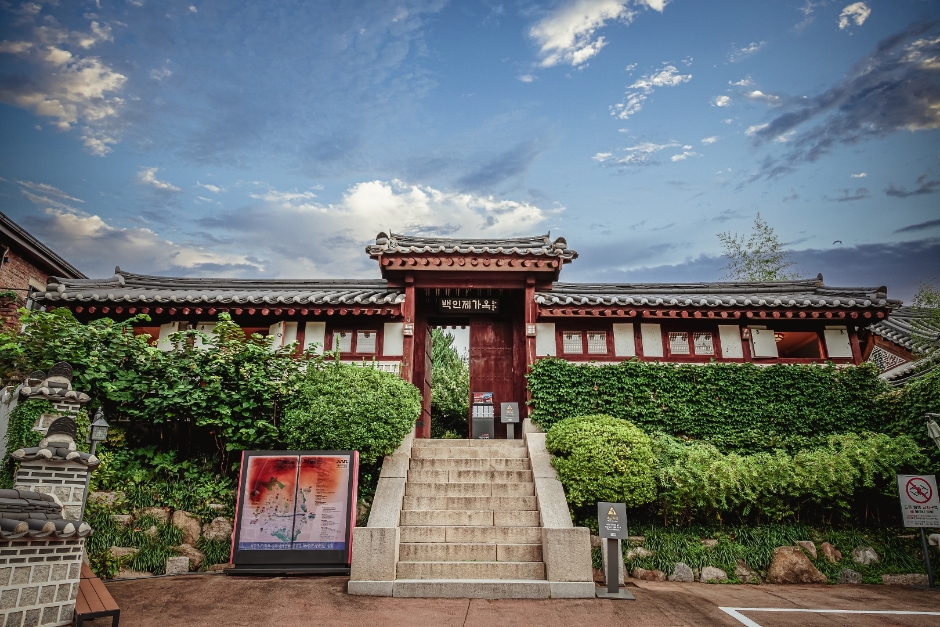
Baek Injae House
about 450 m away


Jeongdok Public Library
about 480 m away


National Museum of Modern and Contemporary Art, Seoul
about 570 m away


Bukchon Hanok Village Gamgodang Street
about 650 m away


Mugunghwa Garden
about 790 m away

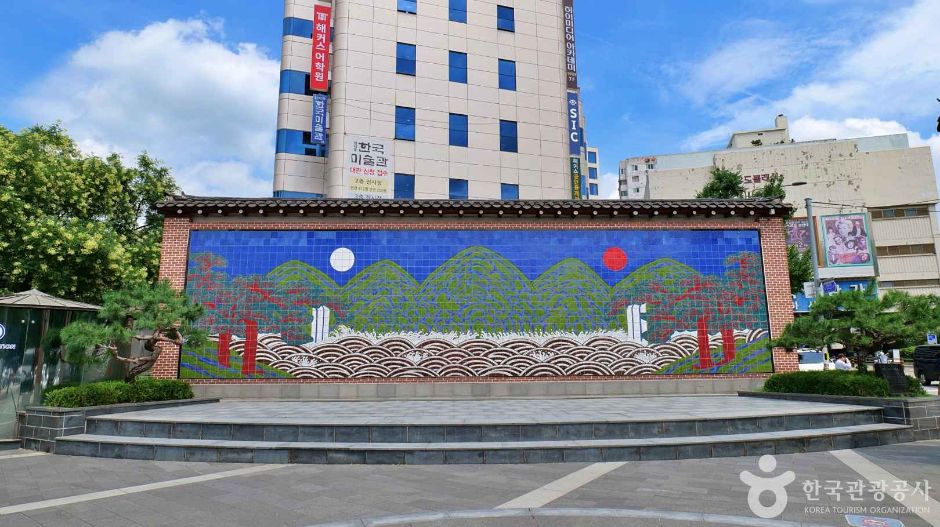
Insa-dong
about 940 m away


Unhyeongung Palace
about 960 m away

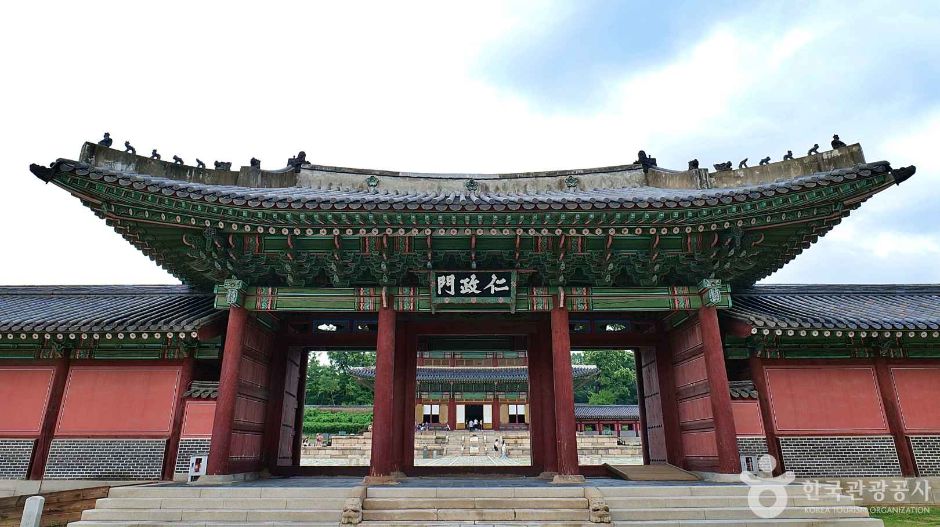
Changdeokgung Injeongmun Gate
about 1040 m away
Source: Korea Culture Information Service Agency (Korean listing, translated by us)
Data as of 11.12. Dates and prices can change, so check the official site before you go.