About
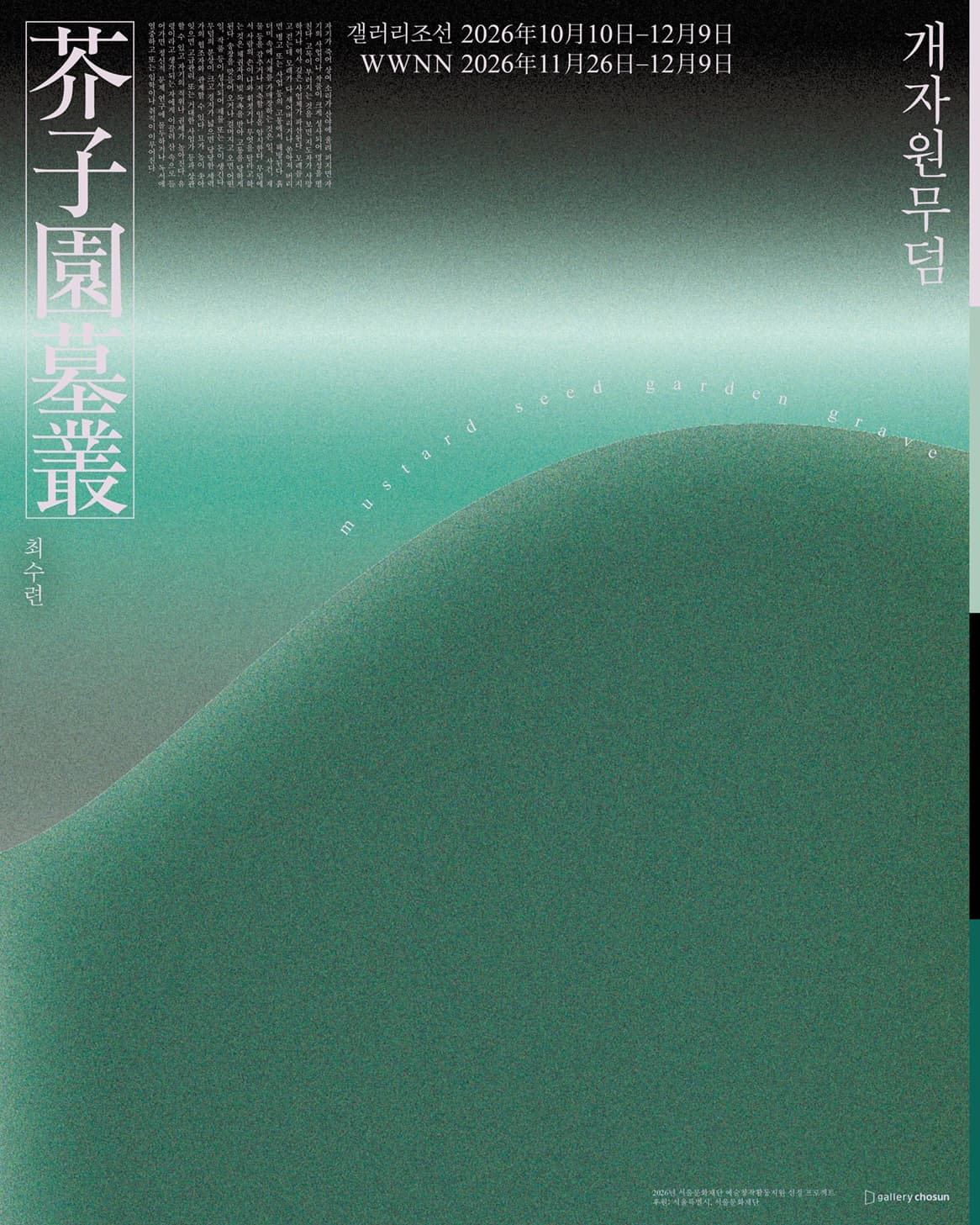
Gallery Chosun presents Mustard Seed Garden Grave (芥子園 墓叢), a solo exhibition by Choi Su-ryeon, from October 10 to December 7, 2026. * For the past few years, I have been hand-copying Qing-dynasty zhiguai tales (tales of the strange) and traditional Northeast Asian painting theory, and studying their Korean translations. Some of the notes that came out of this study looked, in some ways, better than my earlier paintings, so I saw no reason they could not become paintings. The notes go like this. Classical Chinese is usually written fairly neatly and large in black, and some difficult, complex characters are almost drawn rather than written. Readings and Korean interpretations are added in whatever colors happen to be at hand. Lines go crooked; typos are erased and rewritten; missing characters, noticed late, are squeezed in; fluorescent colors divide sections or mark what matters. Sometimes I write my own translation under an existing one, or write my literal translation first and add the smoother phrasing of the existing translation in parentheses. Now and then I also jot down criticism of the historical background or the characters. Through this process, unfamiliar and familiar languages mix on the surface, faded colors sit beside bright, fresh ones, and what I know is clearly separated from what I don't. Seen through the eyes of language, this is about penmanship practice and translation; seen through the eyes of painting, it is a process in which unexpected colors and forms thankfully rise up ahead of my will and naturally build an inevitable composition. * Among the small mounds that may have stood in the "Mustard Seed Garden" of the Mustard Seed Garden Manual of Painting (芥子園畫傳), I imagined that some might be graves. I supposed that something "wicked and sinister" lay buried beneath that small garden where profound conversations about painting once took place. If the stories that run through the works mostly come out of graves, the images placed alongside the text are summoned from traditional Northeast Asian painting, including the Mustard Seed Garden Manual. Trees, rocks, waves, hills and houses from Korea, China and Japan, each in a slightly different style, form ordinary landscapes that could illustrate any story. In the process, the results are at times deft, but mostly clumsy. *** Held at two venues, the exhibition is broadly divided into paintings and drawings. Gallery Chosun mainly shows large paintings that reference the composition of Persian miniatures, while WWNN presents drawings that experiment with comic-style composition, doodles, reverse sides and attached slips.
Mustard Seed Garden Grave (개자원 무덤 芥子園 墓叢)
Sat, Oct 10 – Wed, Dec 9
Gallery Chosun
서울특별시 종로구 북촌로5길 64 갤러리 조선
3 Anguk
about 500 m away
Free
Contact +82 2-723-7133
About
Gallery Chosun presents Mustard Seed Garden Grave (芥子園 墓叢), a solo exhibition by Choi Su-ryeon, from October 10 to December 7, 2026. * For the past few years, I have been hand-copying Qing-dynasty zhiguai tales (tales of the strange) and traditional Northeast Asian painting theory, and studying their Korean translations. Some of the notes that came out of this study looked, in some ways, better than my earlier paintings, so I saw no reason they could not become paintings. The notes go like this. Classical Chinese is usually written fairly neatly and large in black, and some difficult, complex characters are almost drawn rather than written. Readings and Korean interpretations are added in whatever colors happen to be at hand. Lines go crooked; typos are erased and rewritten; missing characters, noticed late, are squeezed in; fluorescent colors divide sections or mark what matters. Sometimes I write my own translation under an existing one, or write my literal translation first and add the smoother phrasing of the existing translation in parentheses. Now and then I also jot down criticism of the historical background or the characters. Through this process, unfamiliar and familiar languages mix on the surface, faded colors sit beside bright, fresh ones, and what I know is clearly separated from what I don't. Seen through the eyes of language, this is about penmanship practice and translation; seen through the eyes of painting, it is a process in which unexpected colors and forms thankfully rise up ahead of my will and naturally build an inevitable composition. * Among the small mounds that may have stood in the "Mustard Seed Garden" of the Mustard Seed Garden Manual of Painting (芥子園畫傳), I imagined that some might be graves. I supposed that something "wicked and sinister" lay buried beneath that small garden where profound conversations about painting once took place. If the stories that run through the works mostly come out of graves, the images placed alongside the text are summoned from traditional Northeast Asian painting, including the Mustard Seed Garden Manual. Trees, rocks, waves, hills and houses from Korea, China and Japan, each in a slightly different style, form ordinary landscapes that could illustrate any story. In the process, the results are at times deft, but mostly clumsy. *** Held at two venues, the exhibition is broadly divided into paintings and drawings. Gallery Chosun mainly shows large paintings that reference the composition of Persian miniatures, while WWNN presents drawings that experiment with comic-style composition, doodles, reverse sides and attached slips.
More shows & exhibitions
Chunja in Wonderland, Yongsan musical ([서울 용산] 이상한 나라의 춘자씨)
Fri, Oct 16 – Sun, Nov 15
Ban Min-su: Who Will Go Before Us (반민수: 𝐖𝐡𝐨 𝐖𝐢𝐥𝐥 𝐆𝐨 𝐁𝐞𝐟𝐨𝐫𝐞 𝐔𝐬)
Thu, Oct 22 – Sat, Nov 14Free entry
2026 Namsan Night Festival (2026 남산 나이트 페스티벌)
Fri, Oct 23 – Sat, Nov 14Free entry
[Seoul Gwangjin] Nambeol ([서울 광진] 남벌)
Fri, Oct 23 – Sat, Nov 14
In the Midst of Countless Beginnings (무수한 시작의 가운데에서)
Sat, Oct 24 – Tue, Nov 17Free entry
[Seoul Seodaemun] If You Want a Red Apple ([서울 서대문] 빨간 사과가 먹고 싶다면)
Sat, Oct 24 – Sun, Nov 15
[Daehangno] Majesty ([대학로] 마제스티)
Sun, Oct 25 – Sun, Nov 15
[Gallery 9.5] FONS: Collected Moments ([갤러리 9.5] FONS 수집된 순간)
Sun, Oct 25 – Sat, Nov 14Free entry
Kate Solo Exhibition: A World Still Soft (카테 개인전 "아직 무른 세계")
Tue, Oct 27 – Wed, Nov 25Free entry
Park Ji-hye Solo Exhibition: Since The Day (박지혜 개인전 《그 날 이후 Since The Day》)
Fri, Oct 30 – Thu, Nov 12Free entry
Places to visit nearby


Jeongdok Public Library
about 160 m away


National Museum of Modern and Contemporary Art, Seoul
about 190 m away


Bukchon Hanok Village Gamgodang Street
about 240 m away

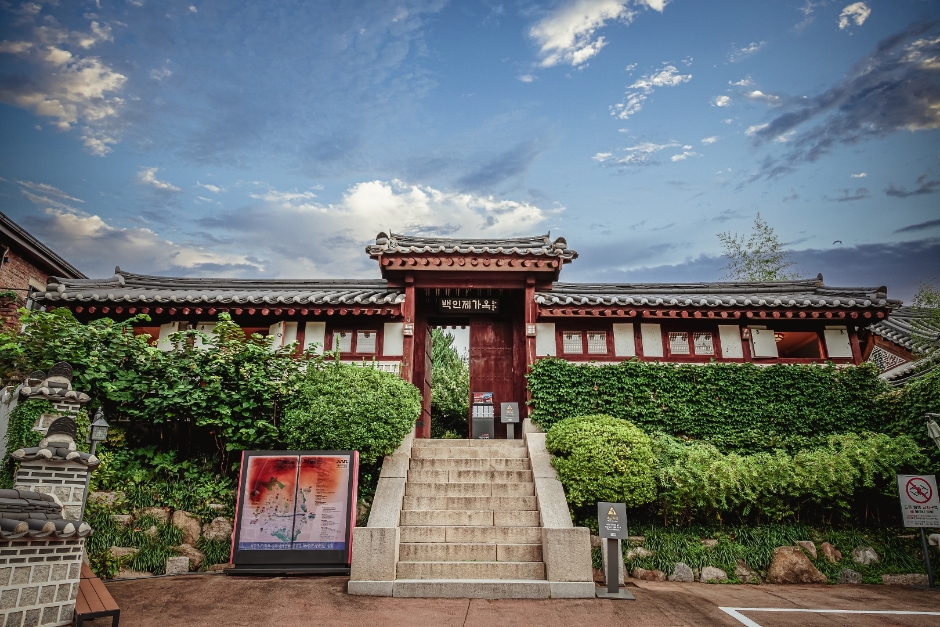
Baek Injae House
about 240 m away

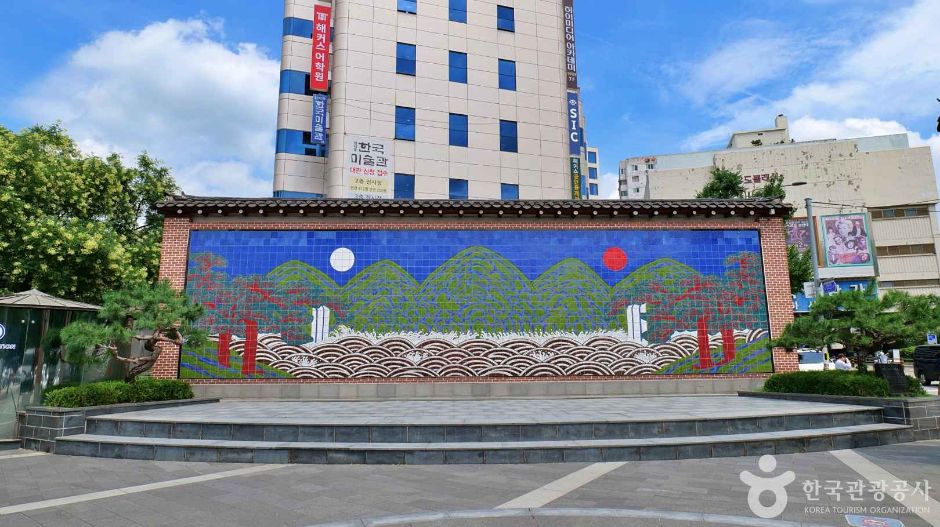
Insa-dong
about 530 m away


Unhyeongung Palace
about 630 m away


Toin
about 660 m away


Boseongsa Site
about 670 m away
Source: Korea Culture Information Service Agency (Korean listing, translated by us)
Data as of 11.12. Dates and prices can change, so check the official site before you go.