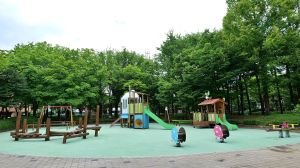

Heojun Neighborhood Park허준근린공원
Name translated by Tripbloom
서울특별시 강서구 허준로5길 42 (가양동)
Nearest subway station
9Gayang
about 698 m away
About
Heojun Neighborhood Park was created by the Seoul Metropolitan Government as a park for local residents when a large-scale housing district was developed in the area. It was named in honor of Heo Jun (1539–1615), author of Dongui Bogam (25 volumes, 3,106 pages), who was born and died here in the Gongam area. Before Olympic-daero was built, the river is said to have flowed right up to the foot of the Tapsan cliff, and two rocks rose like pillars from the water, forming a beautiful riverside landscape. Legend has it that these rocks drifted down from Gwangju, so they were called Gwangjuam. Because of this, Gwangju-gun used to collect several bush-clover brooms from Yangcheon each year as the rocks' yield. The practice stopped after Yangcheon told them it had no need for the rocks and that Gwangju should take them back. When the housing development threatened to bury Gwangjuam, a new embankment was built to preserve the rocks in their original form, and a lake park was created around them. The area around the park is rich in legends and historic sites. Gongam Chungtap and Soyojeong Pavilion once stood on Tapsan, and the view of the Hangang River from there was as wide as the sea and so beautiful that many poets and painters came to soothe their weary minds and found subjects for their poems and paintings. Beyond the park's west gate are Gongam Ferry Site, linked to the legend of Tugeumtan, where the late-Goryeo scholars Yi Jo-nyeon and Yi Eok-nyeon threw a lump of gold they had found by the road into the river, fearing it would harm their brotherly bond, and Heogabawi Rock, the cave of the founding ancestor of the Yangcheon (Gongam) Heo clan. About 1 km further on are Yangcheon Hyanggyo, the only local Confucian school remaining in Seoul, the Yangcheon Fortress Site, and the Soakru Pavilion Site. On the hill north of the park's lake stands a statue of Heo Jun, a great scholar known for his warm humanity, shown treating a patient. It shows that the area continues the legacy of Gangseo as a district of history and culture.
Description translated by Tripbloom from Korea Tourism Organization data
 K-MetroKorea Subway Map · route to GayangOpen
Photo & data: Korea Tourism Organization · KOGL Type 3